Neuroception of Safety
How somatic literacy opens the window of inner healing
Nervous System regulation is a popular word in the self-development scene. It seems like whatever we do and whatever we long to achieve is determined by our capacity to hold ourselves through those transition processes of growth.
In my work as a Somatic Coach, I have seen with my own eyes what the feeling of safety can do in terms of inner transformation. Change is scary, and we cannot proceed when we are frozen or anxious. We heal best when we feel safe and connected.
This is why I am educating my clients in my Somatic Coaching programs about their own Nervous System and where they are in relation to it. Somatic literacy, as I call it, is the first step to initiate any change process, whether that is building more confidence, overcoming fears or stuckness in life situations, or improving relationships.
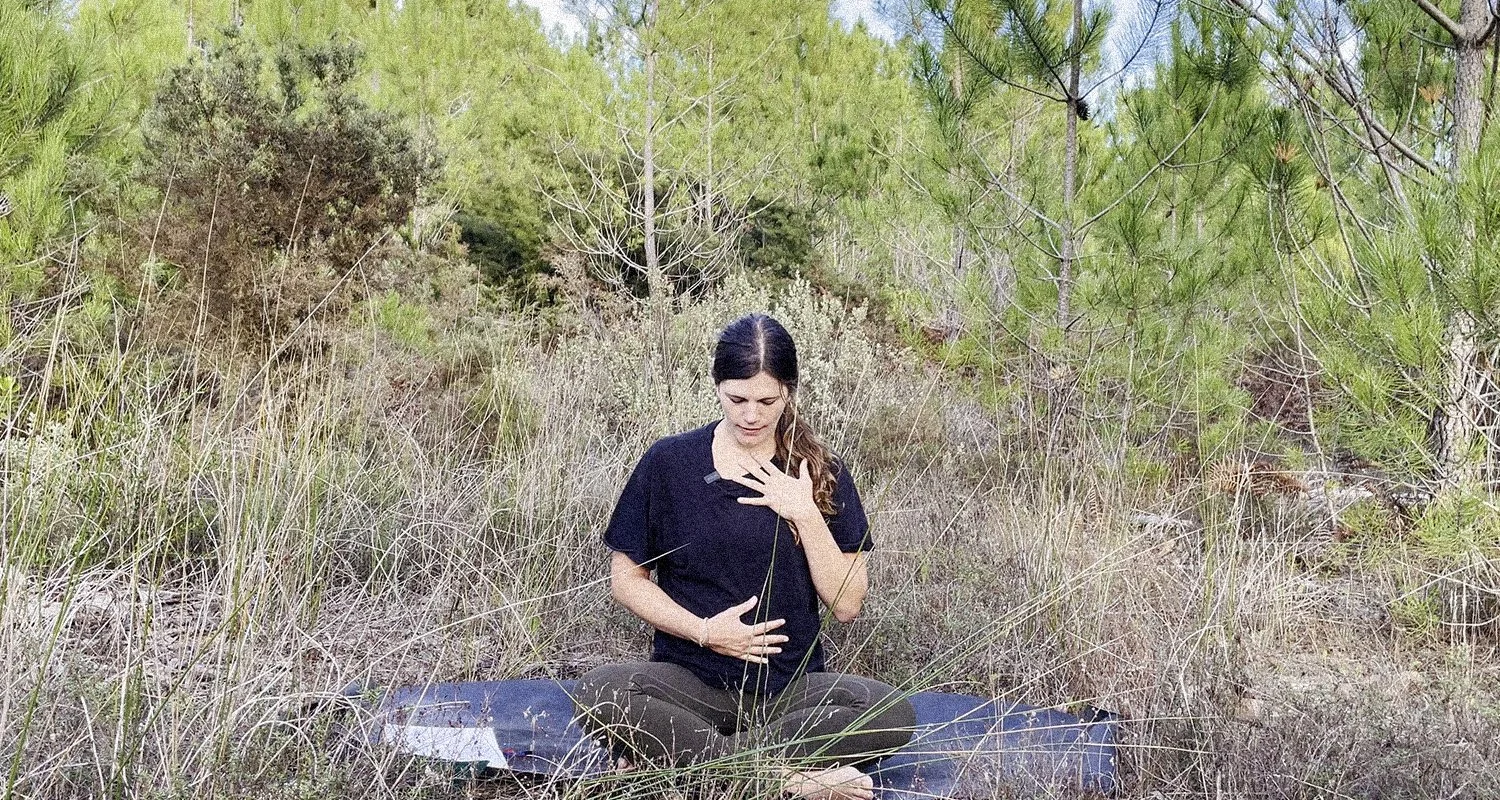
If you are new to Somatic Coaching and Nervous System regulation, welcome!
In this article, I will explain what the neuroception of safety is, how it is relevant to your state of reality, and how to train your somatic awareness in order to identify and befriend your autonomic response so that you can move ahead with compassion and confidence and repattern your story.
Enjoy the read!
What is Neuroception?
Neuroception is a term coined by neuro-scientist Dr. Steven Porges in the context of his Polyvagal theory.
In an ongoing quest to ensure our safety and survival, our autonomous Nervous System has divided its functionality into three sections:
The state of mobilization, otherwise known as our “Fight or Flight mode”, which is responsible for mobilizing our resources in times of danger and activates our body so it can face or get out of situations that are unsafe.
The state of immobilization, or “Freeze””, designed as a last resort in response to immediate life threats, triggered in moments we feel absolutely overwhelmed or incapable of dealing with a given situation, and moving us into a shut-down or numbness.
And the latest, most advanced branch of our Vagus Nerve, the state of social engagement, the ventral vagal energy, that tells us that everything is ok, that we are safe where we are, and are ready and open to soften and connect with others (and ourselves) in order to regulate, grow, and heal.
Going through our day, we will automatically wander between those states depending on what is happening in and around us. You can imagine these states being lined up on a ladder, the Social Engagement state at the top and the Freeze state at the very bottom.
All those three states of autonomic activation are equally important and must be initiated efficiently to move us in the right direction according to our circumstances.
Now, if we would assign this task of surveillance to our thinking brain, we might be pretty lost.
When we live our daily lives, we are constantly flooded with information. Our world is made of images, sounds, shapes, smells, and colours. It gets in touch with us through the senses, seeing, hearing, feeling.
Combined with everything else that is going on for you, as an intelligent, actively engaging human, staying on top of all of those stimuli would certainly surpass your capability and leave you paralyzed by processing all of it.
Neuroception is installed as a wordless, thoughtless, automatic neural circuit that assembles all of the data in and around you and translates it into direct, somatic responses in your body.
In short, the way your Nervous System sees the world creates your reality.
Neuroception of Safety - living your story
While the work of the autonomous nervous system of constantly assessing risks and threats around us happens primarily outside of our awareness, we are strongly affected by its decision-making.
Essentially, we live our lives through whatever lens of Nervous System state is active within us. We get to taste the flavours of the different states and get access to the specific ingredients each of them uses to create your experience.
From a neuroception of unsafety, our body moves us either towards a state of sympathetic mobilization (Fight or Flight) or towards dorsal vagal collapse (Freeze).
Both of those states inhibit our ability to socially engage and limit our capacities to the toolbox of fight/flight or shut-down and dissociation.
In real-life terms, those reactions to “unsafety” might be seen in your behavior in the form of raising your voice, tensing your facial expression, gesticulating, or, on the other side of the spectrum, avoiding eye contact, quieting down in an argument, or “zoning” out in a conversation.
Internally, you might sense the consequences of perceived danger as heartbeat fastening, anxiety, tension in your chest, feeling pressured to leave, or else noting a sense of hopelessness or disconnection from your feelings or the people around you.
When your neuroception sends signals of danger, your reality becomes one of danger too and it is very hard to see different perspectives from this restricted point of view.
From a neuroception of safety, however, you enter the state of ventral vagal energy, where the qualities of your Social Engagement System are available to you. From this state, you are able to connect, communicate, and co-regulate with others and yourself.
You see life as a place of opportunities and joy, and what seems like an obstacle in a state of fight, flight, or freeze looks like a chance for growth and expansion from a state of safety.
Faulty Neuroception
By now, you may get the idea why having awareness about our nervous system state is an important aspect when working with inner healing.
While the automatic process of neuroception can be life-saving in times of real danger and life threat, it can also hinder your growth if it picks up the wrong cues and misfires autonomic responses of activation.
This so-called "faulty neurocpetion" can be the result of traumatic experiences or chronic stress. Situations that under “normal” circumstances would pass as “safe” or neutral could hold unconscious memories of bad experiences our body remembers from the past, of times when danger was present and was not “repaired” by safe connection afterwards.
Examples of this could be early childhood experiences where a need was not met. The event itself might be much less dramatic than you think, like being put into bed while crying and then left alone for 5 minutes because mum went to answer the doorbell and came back “too late" in order to soothe the little one. It might not seem like a big deal to the mum, but for the baby, in a helpless state, through the lens of their reality with limited access to self-soothing, a situation like this can easily seem like a life-threat.
From the viewpoint of neuroception, being left alone is now stored as a reason to panic and might be carried over into adult life where, rationally, aloneness is not an issue but subconsciously is seen as a danger and triggers a full-on autonomic response of activation.
We walk through life as grown-ups with a backpack of stored danger cues, mostly unaware of what triggers them, but clearly feeling the somatic responses.
Neuroception vs Perception - developing Somatic Literacy
In the somatic coaching context, we make use of our knowledge about the different states of the Nervous System as well as our ability to train our inner awareness to recognize and track what is happening inside before we get carried away by our autonomic responses.
Learning this kind of "somatic literacy" is a powerful step towards understanding the language of our bodies (our “soma”). It is about cultivating a gentle awareness of ourselves as a consciously acting intelligence, not as helpless victims of our autonomic responses. This knowledge empowers us, giving us the ability to read and understand our body's signals, and take control of our responses.
Unlike neuroception, which reads cues around and within our own bodies and initiates responses long before we can make conscious sense of them, perception is an active awareness of what is happening. Being able to witness our autonomic responses gives us room to interpret and intervene and makes us active participants in our own healing and growth.
Perception is a skill that promotes a sense of agency and confidence in your own body. I train it with my Somatic coachees in my 1:1 coaching programs in the form of focusing on internal or sensual feelings while "going through" (which in most cases is equivalent to "talking about") triggering scenarios that evoke a certain inner response.
In this process of "Nervous System Mapping", a person can learn to establish a gentle and non-judgemental awareness of the somatic signals while being in the safe environment of the coaching session, link specific responses of autonomic activation (like anxiety, heart racing, shutting down, etc.) to specific triggers (e.g., talking about a particular person or repeating situation at work etc.), and then progressively track themselves in their daily lives outside of the coaching context in order to re-validate and re-pattern their behaviour under the light of their sharpened awareness.
Bringing conscious perception to the world of autonomic responses is the starting point to change the relationship between ourselves and our bodies, and opens the window to re-create a sense of safety which in turn allows us to heal from misattunement and emotional trauma.
How to leverage Awareness to access deep healing
Here are four steps to use your self-awareness to the benefit of your growth process and healing:
Accepting the fact that neurocpetion is always happening.
Your autonomic Nervous System is continuously on the lookout for cues of danger and safety and is always ready to react, whether triggered correctly or by misattunement or trauma.
Bringing awareness to your autonomic response.
The more you get to know your individual response pattern (for example, by creating your personal Profile Map together with your somatic Coach), the more you will be able to detach from the triggering experiences themselves and instead bring more of an observer energy to the table.
This kind of disidentification from your state is an essential factor for bringing in an interruption to the automatic response pathway. It allows you to move from a state of “being in” to “being with” sensations of activations or challenging emotions.
Awareness of your Nervous System is the beginning stage of self-compassion.
Befriending your experience.
From the standpoint of self-compassion, we get access to our ventral vagal energy, the highest point of our Nervous System ladder, where kindness, social engagement, and care live.
It is that safe place that allows us to loosen our grit and, instead of continuously trying to avoid (freeze mode), fix or defeat (fight or flight), turn to our inner state from an energy of friendly curiosity.
In Somatic Coaching sessions, this is the point we enter our embodied self-awareness, even in the presence of “uncomfortable” feelings and sensations, and follow whatever is present without attachment or judgement, offering attention, kindness, and care to those parts of ourselves that usually don’t get heard and understood.
Deepening into active inquiry.
This is when we reach the realm of self-healing.
Deep within the core of the safe connection you have established through accepting, fine-tuning awareness, and curiosity, you have opened the window of intuition and heart-felt connection with yourself. This is the core part of somatic coaching, where we sit together in partnership, hearing out the shadows, fears, and critics, the wounded and scared, deepening the embodiment of what is present, far away from repeated head cycles.
Those are the fruitful moments where we open the possibilities for regulating, resourcing, re-patterning, and re-storying. It is the magic place within yourself, your innermost connection, where safety persists despite any storm around you.
How to establish my own safety? Next steps.
In my Embodied Confidence Program, I gently guide you to get in touch with your inner safety so you can open your window of change and hold yourself confidently during the exploration process.
Within a 3 month container, you will slowly learn to read and understand your inner responses, acknowledge your unique patterning, and rebuild safety and trust in your body so you can move forward with a new story.
If this resonates with you, the first step is to schedule a free Introduction call with me so we can look into your situation and see if my approach is right for you.